


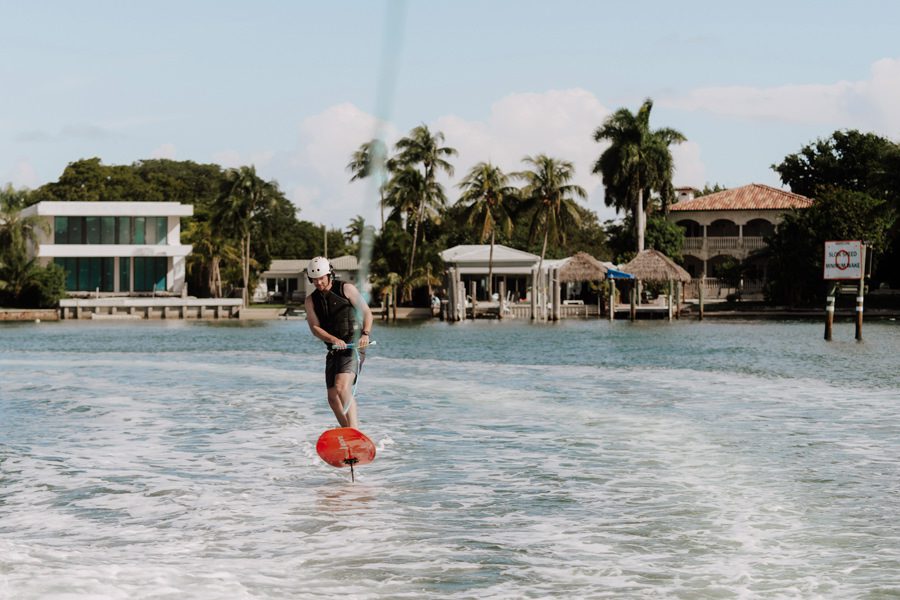
Tow foiling in the ocean — getting whipped into a wave on a foil board behind a jet ski or boat — is one of the most exciting directions foiling has gone in the last few years. Waves at spots like Puerto Rico, Panama, Costa Rica, and the famously long left at Chicama, Peru, have turned tow foiling into a bucket-list trip for a lot of riders.
The catch: most people who want to try it have never actually ridden a wave on a foil. They’ve foiled behind a boat, maybe even gotten comfortable wakefoiling on flat water, but the idea of dropping into a moving wave face feels like a completely different sport.
Good news: it isn’t as different as it feels, and you don’t need ocean experience to get there.
What boat wakefoiling actually teaches you
Riding behind the boat builds the foundational skills that wave foiling depends on: getting up cleanly and consistently, controlling foil height through pumping, reading and reacting to speed changes, holding an edge through a turn, and — maybe most importantly — building the instinct to stay relaxed and let the foil do the work instead of fighting it. None of that knowledge disappears when you move to a wave. It’s the same foil, the same basic mechanics, just a different source of energy pulling you along.
What’s different in the ocean is the variable: a wave isn’t a flat, predictable tow line. It speeds up, slows down, and changes shape under your feet. That’s exactly why building rock-solid fundamentals behind the boat first — in a controlled, predictable environment — matters so much. The fewer things you have to think about when you’re learning to read a wave, the faster you’ll actually start riding it instead of falling off of it.
Bridging the gap from boat to wave
At Watersports Paradise, we’ve built a progression specifically for riders who want to go from comfortable behind the boat to confident tow foiling in waves — even with zero ocean wave experience. Sessions focus on the specific skills that carry over directly: managing speed transitions, working the foil through varying pull, riding switch, and developing the calm, patient mindset that wave foiling rewards.
Once you’ve built that base, the jump to a tow-foiling trip in Puerto Rico, Panama, Costa Rica, or Chicama stops feeling intimidating and starts feeling like the natural next step. You show up already knowing how your foil behaves under load, already comfortable at speed, and already past the steepest part of the learning curve — which means more of your trip is spent actually riding waves instead of relearning how to stand up.
You don’t need to live near a wave to get ready for one
That’s really the point. Miami doesn’t have ocean-style tow waves, but it has exactly what you need to build the skills those waves demand: flat, consistent water, boat speed you can dial in precisely, and a coach who can isolate and drill the exact mechanics that translate to riding in waves.
Sessions are small — a maximum of 4 riders per group — with a USA Waterski & Wakeboard certified Level 1 Coach with 30 years of on-the-water experience, and every session is fully insured. Whether your wave trip is already booked or still just an idea, this is where the preparation starts.
Rates start at $85/session, with single sessions and 5- or 10-session packages available. Email franck@watersports-paradise.com or call +1-786-484-8022 to start building toward your first tow-foiling wave trip.